Mon 31 August 2026:
The $4.3 billion observatory will search for thousands of exoplanets, study dark energy and map billions of galaxies from a vantage point 1.6 million kilometres from Earth.
NASA has launched its newest flagship space observatory, the Nancy Grace Roman Space Telescope, beginning a mission aimed at answering some of astronomy’s most difficult questions — from the nature of dark energy and dark matter to the prevalence of planets beyond our solar system.
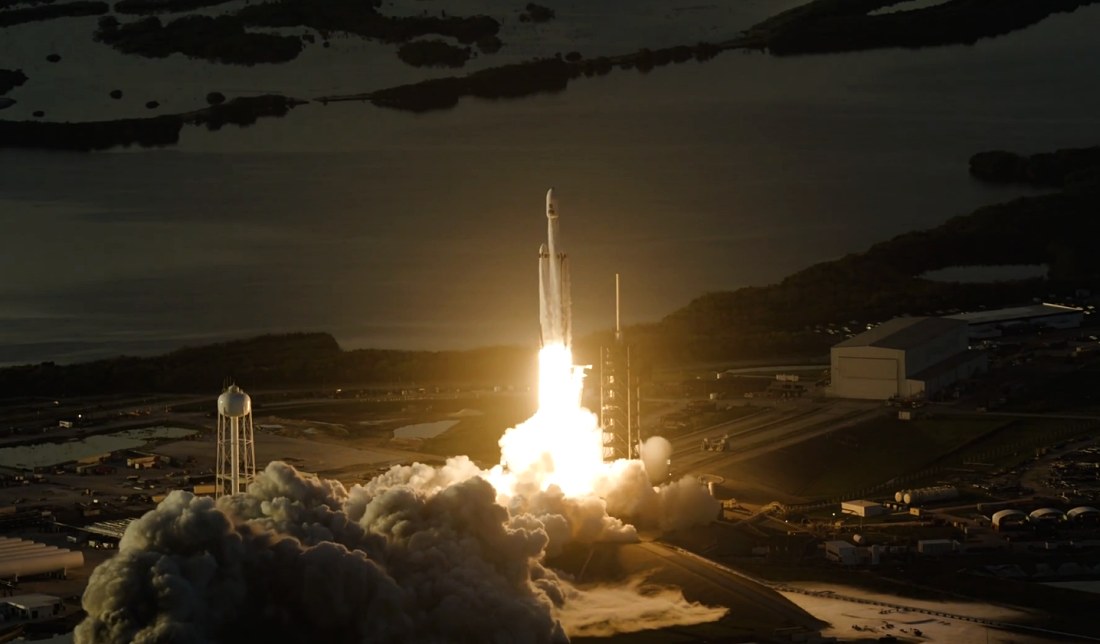
The $4.3 billion telescope lifted off shortly after dawn on Sunday aboard a SpaceX Falcon Heavy rocket from NASA’s Kennedy Space Center in Florida. The powerful rocket, operated by Elon Musk’s SpaceX, is carrying Roman towards Lagrange Point 2, a stable region of space about 1.6 million kilometres from Earth.
Roman is expected to take more than three months to reach its destination, where it will operate alongside the James Webb Space Telescope. NASA has planned an initial five-year scientific mission, although officials say Roman could potentially operate for another five years because of its fuel reserves and its design for possible future refuelling.
Once operational, the bus-sized observatory will conduct an enormous survey of the cosmos. Its primary survey is expected to last more than a year and cover more than 2 billion galaxies, giving scientists an unprecedented view of how the universe has evolved and how quickly it is expanding.
NASA officials also expect Roman to identify thousands of supernovae, tens of thousands of planets and billions of stars.
Nicky Fox, head of NASA’s Science Mission Directorate, said the telescope would allow scientists to conduct observations that have never previously been possible because of its exceptionally wide field of view.
Searching for planets beyond our solar system
One of Roman’s major goals will be to search for exoplanets, or planets orbiting stars beyond the Sun.
Scientists expect the telescope to discover thousands of these distant worlds and, for the first time, produce a broad statistical picture of planetary systems across the Milky Way.
Roman will also help astronomers understand whether planetary systems similar to our own are common or unusual.
The observatory’s discoveries will complement the work of the James Webb Space Telescope. While Roman is designed to scan enormous areas of the sky, Webb can subsequently focus on individual objects and study them in much greater detail.
NASA scientists compare the difference to a camera: Roman acts like a wide-angle lens, while Webb functions more like a powerful zoom lens.
__________________________________________________________________________

https://whatsapp.com/channel/0029VaAtNxX8fewmiFmN7N22
__________________________________________________________________________
Probing dark matter and dark energy
Another central objective is to investigate the mysterious components that dominate the universe.
Scientists estimate that ordinary matter — including stars, planets, gas and dust — accounts for only about 5 percent of the universe. Dark matter is thought to make up roughly 27 percent, while dark energy may account for approximately 68 percent.
Dark matter cannot be seen directly, but its gravitational effects can be observed through its influence on galaxies and stars.
Dark energy is even more mysterious. Scientists believe it is responsible for the accelerating expansion of the universe, but its fundamental nature remains unknown.
By mapping billions of galaxies and measuring their distribution and movement, Roman could provide important clues about these invisible forces. The mission will also test theories of gravity on enormous cosmic scales.
Ready for launch, ready to change how we view the cosmos.
After years of careful planning, testing, and construction, @NASARoman is ready for liftoff tomorrow, Aug. 30. pic.twitter.com/6KzZjUOu8F
— NASA (@NASA) August 29, 2026
A new era alongside Hubble and Webb
Roman joins NASA’s two other major space observatories, Hubble and Webb, creating a powerful combination for exploring the universe.
Hubble, which has been operating in space for more than three decades, remains renowned for producing detailed images of individual cosmic objects. Roman, however, will have a field of view more than 100 times wider than Hubble’s, allowing it to survey huge sections of the sky much faster.
NASA scientist Julie McEnery said that surveying the Milky Way for one month with Roman would take Hubble roughly a century.
Webb, meanwhile, has transformed scientists’ understanding of the early universe by observing extremely distant galaxies whose light has travelled for billions of years.
Roman will complement Webb by identifying large numbers of potentially interesting objects across the sky, allowing Webb to concentrate on detailed observations of the most scientifically important discoveries.
The three NASA observatories will also work alongside the European Space Agency’s Euclid spacecraft and the National Science Foundation’s Vera C. Rubin Observatory in Chile.
In under a week, @NASARoman is scheduled to launch 1 million miles away to help us see the big picture of the cosmos.
We’ll be broadcasting Roman’s launch live starting at 6:20am ET (1020 UTC) on Aug. 30. Save the date and set your alarm to join us here! pic.twitter.com/5E8fYmzY4d
— NASA (@NASA) August 24, 2026
A tribute to the “Mother of Hubble”
The telescope carries the name of Nancy Grace Roman, NASA’s first chief astronomer and a pioneering figure in the development of space-based astronomy.
Roman joined NASA soon after the agency was established in 1958 and strongly advocated putting astronomical observatories above Earth’s atmosphere, where they could obtain clearer views of the cosmos.
Her work helped lay the foundations for what eventually became the Hubble Space Telescope. Former NASA scientist Ed Weiler later called her the “Mother of Hubble.”
Roman died in 2018 at the age of 93. NASA officials said the new telescope represents a fitting tribute to her legacy.
The mission also marks the first time NASA has named a space telescope after a woman.
A dramatic launch
The Falcon Heavy’s launch was followed by a series of precisely coordinated events.
Only minutes after liftoff, the rocket’s two side boosters separated and returned through the atmosphere, producing loud sonic booms before landing at Cape Canaveral.
Soon afterwards, Roman successfully separated from the rocket’s upper stage. The successful deployment prompted applause from NASA’s mission control team, with Fox visibly emotional as she watched the spacecraft begin its journey.
The telescope launched almost a year earlier than previously scheduled and within its planned budget — a notable achievement for a complex NASA flagship mission.
Roman’s development also survived repeated attempts during Donald Trump’s first and second presidential administrations to cancel or dramatically reduce funding for the project. Congress intervened to preserve the programme on each occasion.
Now, with its journey to deep space under way, the Nancy Grace Roman Space Telescope is set to give astronomers a dramatically wider view of the universe — potentially revealing thousands of new worlds and offering critical evidence about the forces shaping the cosmos.
SOURCE: INDEPENDENT PRESS AND NEWS AGENCIES
__________________________________________________________________________
FOLLOW INDEPENDENT PRESS:
WhatsApp CHANNEL
https://whatsapp.com/channel/0029VaAtNxX8fewmiFmN7N22

TWITTER (CLICK HERE)
https://twitter.com/IpIndependent

FACEBOOK (CLICK HERE)
https://web.facebook.com/ipindependent

YOUTUBE (CLICK HERE)
https://www.youtube.com/@ipindependent

Think your friends would be interested? Share this story!