Thu 15 October 2026:
Security forces report multiple casualties as tensions rise in Sistan and Baluchestan province, compounded by external pressures and deep-rooted grievances over minority rights.
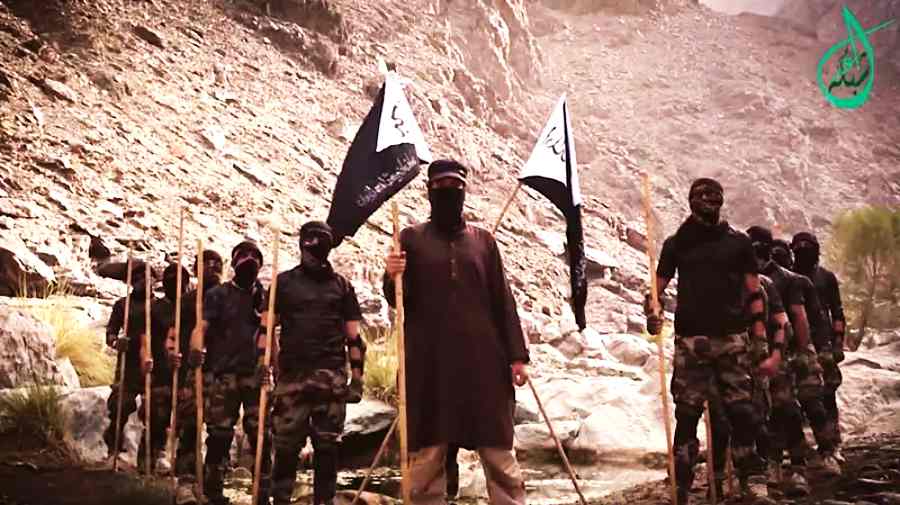
Iran is confronting a sharp increase in attacks by separatist militants in its southeast, adding to the country’s security burdens while authorities remain on high alert over potential U.S. military action. The unrest centers on Sistan and Baluchestan, a Sunni-majority province bordering Pakistan and Afghanistan that is home to Iran’s Baluch ethnic minority and ranks as the nation’s poorest region.
Recent Attacks Claim Security Personnel
State media report that at least eight members of Iran’s security forces have been killed in the province over the past three weeks. On Wednesday, a police officer and a female member of the Basij militia were killed in an attack by armed militants near the town of Mehrestan, according to the semi-official Fars news agency.
Other incidents include the death of a senior IRGC commander who died “while confronting enemy-backed terrorists” and the killing of a provincial official in a roadside bomb, as reported by the state-run Hamshahri newspaper and the Islamic Republic News Agency.
__________________________________________________________________________

https://whatsapp.com/channel/0029VaAtNxX8fewmiFmN7N22
__________________________________________________________________________
Tehran Points to Foreign Support for Militants
Hassan Ahmadian, an associate professor of West Asian Studies at Tehran University, has argued that the uptick in separatist activity in Sistan and Baluchestan forms part of broader U.S. and Israeli efforts to undermine Iran’s internal stability. Speaking to Al Jazeera, Ahmadian noted a marked rise in arms- and people-smuggling operations in recent months, which he said has fueled more frequent clashes, attacks, and casualties among both civilians and security personnel. He contended that the primary aim of such external support for separatists is to generate widespread security chaos inside Iran.
Iranian authorities have long battled armed Sunni insurgents in the province, frequently accusing the United States and Israel of backing groups such as Jaysh al-Adl to stir unrest. Both Iran and the United States designate Jaysh al-Adl as a terrorist organization.
A parliamentary delegation visited the province last week amid concerns over the clashes and the effects of the ongoing U.S.-Israeli confrontation with Iran. Lawmakers and security officials “inspected the border wall construction and sealing operations being carried out by the IRGC,” Fadahossein Maleki, a member of parliament’s national security and foreign policy commission, told the semi-official Tasnim news agency.
Broader Tensions and Regional Context
The recent violence coincides with the U.S.-Israeli war against Iran approaching its ninth month, as Washington and Tehran remain at an impasse over control of the strategic Strait of Hormuz. U.S. President Donald Trump has said the U.S. “may” act against Iran before midterm elections on Nov. 3. Iran’s army chief Amir Hatami stated last week that the war has not ended and that the military would stay prepared for further American attacks, according to Tasnim.
Entrenched Discrimination and Marginalization of the Sunni Population
Beyond immediate security threats, Sistan and Baluchestan has long been marked by structural discrimination against its Sunni Baluch population, who form both an ethnic and religious minority in a predominantly Persian Shia state. Human rights organizations, international reports, and local clerics have documented systemic barriers: Sunnis are effectively barred from high-level national offices (the constitution requires the president to be a Shia male, and no Sunni has served as a cabinet minister), underrepresented in provincial governance and security forces even in majority-Sunni areas, and restricted in religious practice, including prohibitions on building or repairing Sunni mosques in major cities such as Tehran.
The province suffers chronic underdevelopment, with poverty rates often exceeding 50 percent, high unemployment, water scarcity, and limited access to services—conditions that rights groups and researchers link to neglect compounded by ethno-sectarian factors. Economic desperation has driven fuel smuggling, frequently met with lethal force from security services. In 2021, security forces killed at least 12 people after opening fire on fuel traders who had gathered at a border post during a protest. In 2022, during the Woman, Life, Freedom protests, rights groups reported that security forces killed at least 96 people in Zahedan after opening fire on demonstrators, an event widely known as “Bloody Friday.”
Sunni clerics, including prominent figures such as Molavi Abdolhamid, have repeatedly highlighted marginalization, restrictions on religious education, and disproportionate executions of Baluch individuals. While recent appointments, such as the first Sunni Baluch provincial governor in decades, have been noted as limited steps toward inclusion, activists and reports from groups including the International Crisis Group and human rights documentation centers emphasize that underinvestment, securitization of the region, and political exclusion continue to fuel resentment and occasional unrest.
Poverty, workers’ rights issues, water shortages, and the state’s marginalization of ethnic Baluchis regularly spark protests against local authorities that frequently turn deadly, underscoring the interplay between security operations and longstanding grievances in Iran’s most restive province.
SOURCE: INDEPENDENT PRESS AND NEWS AGENCIES
__________________________________________________________________________
FOLLOW INDEPENDENT PRESS:
WhatsApp CHANNEL
https://whatsapp.com/channel/0029VaAtNxX8fewmiFmN7N22

TWITTER (CLICK HERE)
https://twitter.com/IpIndependent

FACEBOOK (CLICK HERE)
https://web.facebook.com/ipindependent

YOUTUBE (CLICK HERE)
https://www.youtube.com/@ipindependent

Think your friends would be interested? Share this story!