Fri 03 July 2026:
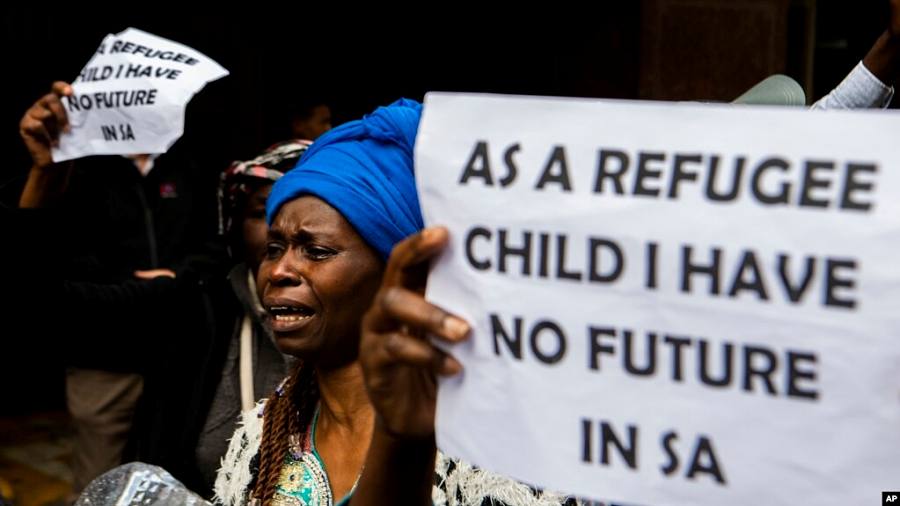
On June 30, an unofficial deadline invented by anti-migrant vigilantes came and went. No court had issued it and no statute authorised it. It travelled, instead, by WhatsApp, dressed up in the clipped, bureaucratic language of an official notice, and for weeks it was treated by frightened people across this country as though it carried the force of one. In Durban, more than three thousand Malawians, many of them children, gathered in an open field that had become an improvised transit camp, waiting for buses home rather than risk what the deadline threatened. In Mossel Bay, Mozambican nationals were killed. In Pietermaritzburg, a Malawian man was beaten to death after a wave of public incitement that local residents would later describe, almost apologetically, as “opportunistic criminality” rather than organised xenophobia, as though the distinction offered any comfort to his family. Nigeria, Ghana, Mozambique and Malawi all dispatched aircraft to bring their citizens home. None of this evacuation was ordered, requested, or endorsed by the Republic of South Africa. And yet, for the better part of a month, the Republic simply let it happen.
It would be comforting to call this incompetence, a bureaucracy overwhelmed by events it could not have foreseen. It is not that. It is the entirely predictable output of a settlement engineered, three decades ago, to make every faction at the negotiating table feel satisfied on paper while deferring every genuinely hard question about power, land and resources to some unspecified future date. That future has now arrived, and the bill for its arrival is being paid by people who can least afford it: precarious migrants without the protection of citizenship, and, in a cruelty this country has yet to name honestly in its own public conversation, the children and grandchildren of the very states that bled so that our liberation could happen at all.
__________________________________________________________________________

https://whatsapp.com/channel/0029VaAtNxX8fewmiFmN7N22
__________________________________________________________________________
A pact that promised everything and guaranteed little
The 1994 settlement is remembered, correctly, as a triumph of negotiation over civil war. What tends to be forgotten, or deliberately smoothed over in the retelling, is that a negotiated triumph is still a negotiation, and negotiation means compromise, and compromise always carries a price that someone, eventually, has to pay. The sunset clauses guaranteed apartheid civil servants their jobs for a further five years, a concession Joe Slovo argued for precisely because it was the only way to keep the old security establishment from derailing the transition altogether. The Government of National Unity kept the National Party inside the tent rather than removing it from power outright. And the property clause, after extended and often bitter negotiation, precluded outright confiscation of land and enshrined existing ownership as a constitutional right, a decision the ANC itself fought hard to soften but ultimately could not avoid.
One person, one vote, was won at that table. One person, one hectare, quite deliberately, was not.
Two years later, without a single foreign creditor forcing its hand, the ANC quietly buried its own Reconstruction and Development Programme and replaced it with GEAR, the Growth, Employment and Redistribution framework, an austerity programme barely distinguishable in substance from the structural adjustment packages our liberation movement had spent decades condemning when they were imposed on the rest of the continent by the IMF and World Bank. This was not a policy the country was forced into. It was a policy the country’s new government chose, believing that fiscal discipline and market confidence would eventually deliver the redistribution that direct state intervention had been designed to achieve more quickly.
Layered on top of this economic settlement, though, was a genuinely radical Bill of Rights, one that promises housing, healthcare, food, water and social security as justiciable rights belonging to everyone within our borders. This was, and remains, one of the most progressive constitutional texts written anywhere in the twentieth century. But every one of these rights carries an identical, quietly disarming qualifier: the state must act reasonably, within its available resources, toward their progressive realisation. That clause was what allowed business, the old order, and a nervous ANC leadership to accept a rights-rich constitution without any of them believing it would bankrupt or dispossess them.
It bought consensus in 1994, and it has functioned as a permanent alibi ever since. Our Constitutional Court, in landmark cases like Grootboom and the Treatment Action Campaign judgment, has shown real teeth: it can and does find a given policy unreasonable. What it cannot do, under this framework, is compel a fixed delivery date. There is no target, and where there is no target, there is no enforceable failure, only an endlessly renewable, entirely lawful deferral, wrapped in the reassuring language of constitutionalism. Thirty-two years on, we remain among the most unequal societies on earth, our official unemployment rate sits above 30 percent, and the scarcity this settlement all but guaranteed has finally found the scapegoat it was always going to find. It is not the property clause that gets blamed on a Soweto street corner. It is not GEAR, and it is not three decades of governing choices. It is the migrant standing in the same queue, for the same overstretched clinic, for the same shrinking piece of an economy that was never restructured to include everyone in the first place.
The debt we are failing to honour
Here is what should shame us more than almost anything else unfolding in this crisis: the countries whose citizens are currently being hunted through the streets of Gauteng and KwaZulu-Natal are, disproportionately, the very countries that paid for our liberation in blood.
Under P.W. Botha’s Total Strategy, the South African Defence Force launched eleven major cross-border incursions into Angola between 1978 and 1988 alone, and simultaneously armed, trained and directed both Jonas Savimbi’s UNITA and Mozambique’s RENAMO into civil wars that gutted two newly independent nations for well over a decade. In January 1981, SADF commandos crossed into a Maputo suburb and killed thirteen ANC members in the houses where they were sleeping, alongside a Portuguese electrician who had the misfortune of being in the wrong building. Historians of the period have estimated the total regional cost of this campaign of destabilisation at more than twenty-seven billion dollars since 1980, with upwards of two and a half million people displaced across the so-called frontline states as a direct consequence of South African policy.
Mozambique, Zimbabwe, Zambia, Angola, Lesotho and Botswana sheltered our liberation movement’s exiled leadership, its training camps and its supply routes, and they were bombed, starved and economically strangled for having done so. Their grandchildren are, today, the Mozambicans killed in Mossel Bay this year, the Malawian man beaten to death in Pietermaritzburg, and the Zimbabweans stripped of the exemption permits that our own governing party moved to end even before this latest wave of violence began. We owe these nations a debt that spans generations, and rather than making any visible attempt to honour it, our post-apartheid state is quietly finishing the damage its apartheid predecessor started.
There is a further irony sitting inside this history, and it is not a subtle one. When the SADF was formally dissolved into the SANDF after 1994, its personnel did not disappear from public life; they privatised. Executive Outcomes, founded by former SADF Lieutenant Colonel Eeben Barlow, became the founding template for an entire industry, one that has since made South Africa home to the largest private security workforce on the planet, with well over two million registered guards. The same institutional lineage that helped break Angola and Mozambique in the 1980s has quietly reconstituted itself as the security apparatus and the pool of “security analysts” now profiting from the business of protecting South Africans from the grandchildren of the very people it once displaced. This is not history simply repeating itself. It is history being professionalised, monetised, and rebranded as expertise.
A state that speaks two languages
President Ramaphosa has said, correctly, that taking the law into one’s own hands has no place in our constitutional democracy, and government spokespeople have repeatedly insisted that the Constitution guarantees dignity to everyone within our borders, regardless of nationality. As a matter of constitutional text, they are right. As a description of what the state has actually been willing to enforce, the evidence tells a different story.
Section 7 of the Constitution does not merely restrain the state from violating rights; it actively obliges the state to protect them. Section 1 entrenches the rule of law as a founding, unamendable value of our democracy. In practical terms, only the Immigration Act empowers any person or institution to verify another person’s immigration status in this country, and no vigilante movement holds that authority, whether legally, morally or constitutionally. And yet Operation Dudula and March and March have, between them, blockaded access to more than fifty public health facilities across four provinces, a wholly fabricated deportation deadline was allowed to function as de facto government policy for the better part of a month, and, according to the state’s own arrest statistics, migrants have proven more likely to be detained in the aftermath of xenophobic violence than the South Africans who actually perpetrated it.
At a certain point, this pattern stops resembling ordinary administrative negligence and starts to resemble something closer to what our own courts have already recognised as unconstitutional: foreseeable harm that the state knew about, had the means to prevent, and nonetheless allowed to continue. In Carmichele v Minister of Safety and Security, our Constitutional Court made clear that the state’s failure to protect against foreseeable private violence can itself constitute a breach of constitutional duty. Complicity of this kind does not require intention. It requires knowledge, followed by inaction, and on that measure, the current crisis meets the threshold with room to spare.
Nor is this contradiction confined to street-level enforcement. The Cabinet-approved White Paper on Citizenship, Immigration and Refugee Protection, a policy framework that ANC First Deputy Secretary-General Nomvula Mokonyane has personally taken to party platforms to explain and defend, describes the Department of Home Affairs’ core mandate as safeguarding national sovereignty and public security, placing that language ahead of any explicit commitment to rights. Its drafters seriously entertained withdrawing from the 1951 Refugee Convention altogether, abandoning that proposal only after the Department of International Relations and Cooperation warned of the diplomatic damage it would cause, rather than out of any constitutional objection raised from within government itself. The department’s own minister has justified narrowing our obligations toward refugees by pointing to a lack of resources, an argument that, stripped of its parliamentary phrasing, is functionally identical to the one made by the man carrying a sjambok at a taxi rank. When a government’s own foundational migration policy is written in the register of threat, sovereignty and scarcity, it forfeits much of its standing to condemn ordinary citizens who act out that same hierarchy of priorities in the street, with considerably less restraint.
The hypocrisy that exposes the whole system
If further proof is needed that what we are witnessing is selective enforcement rather than principled rule of law, one need only examine how the state has handled its own nationals who have served in the Israeli military during a war that our government itself took to the International Court of Justice, describing it, in formal legal filings, as genocide. South African law is not ambiguous on this question. The Implementation of the Rome Statute Act grants our domestic courts jurisdiction to prosecute citizens for genocide, war crimes and crimes against humanity committed anywhere in the world, and it expressly abolishes “I was following orders” as a defence available to anyone charged under it.
Human rights lawyers have laid formal complaints against dozens of named South African citizens, supported by their own social media accounts, testimony from family members, and, in at least one case, geolocated footage broadcast by Al Jazeera identifying a South African national serving in an elite Israeli sniper unit operating inside Gaza. Government ministers, including the former Minister of International Relations and Cooperation, have stood at podiums and promised that these individuals would be prosecuted upon their return. More than a decade after the first such complaint was filed, following Israel’s 2008-2009 assault on Gaza, not a single conviction has followed. Set that record against the speed and severity with which the state pursued and eventually imprisoned the Thulsie twins, two young Johannesburg brothers arrested merely for attempting to leave the country to join a foreign armed group in Syria. The relevant law exists in both cases. The evidentiary record exists in both cases. What differs is simply whose transgression the state has found the political will to prosecute, and whose it has quietly declined to pursue for over ten years running.
This is the same selective application of the law that leaves a vigilante mob free to stop a taxi and demand to see a stranger’s papers. It is not a coincidence, and it should not be mistaken for one. It is a governing style, consistent across very different domains of public life, and it tells us something uncomfortable about where this state’s actual priorities lie when no one outside the country is watching closely enough to notice.
What citizens of conscience owe this moment
None of this is meant to erase the legitimacy of South Africans’ anger over unemployment, over collapsing municipal services, or over an asylum and immigration system that no administration since 1994 has properly resourced or reformed. That anger is real, it is often justified, and it is precisely the state’s decades of dishonesty about its own failures that has made scapegoating migrants so easy, so quickly, and so repeatedly since the first major wave of xenophobic violence in 2008. But a legitimate grievance does not entitle anyone to construct a parallel, unaccountable enforcement regime in place of the law. And it certainly does not entitle a constitutional state to stand back and watch one being built, brick by brick, clinic by clinic, taxi rank by taxi rank, in plain view of its own police service.
The Constitution was never the problem here, and it is worth saying that plainly, because there are those on both the left and the right who would like to blame the document itself rather than the choices made in its shadow. Its text remains one of the most genuinely radical constitutional settlements written anywhere in the twentieth century, and it still contains everything a serious government would need to act decisively, both against vigilante violence and against the underlying inequality that fuels it. The actual problem is a governing class, spanning the ANC and its Government of National Unity partners alike, that has learned to recite the Constitution’s language whenever it is convenient and to hide behind its resource qualifiers whenever it is not. A state that owes an unpaid, intergenerational debt to Maputo, Harare, Lilongwe and Lusaka cannot credibly claim that it lacks the capacity to stop a fabricated deadline circulating on WhatsApp. It has simply, and repeatedly, chosen not to. That is the choice citizens of conscience now have to name clearly, publicly and without euphemism, before this country is forced to bury anyone else.
The statements, views and opinions expressed in this column are solely those of the authors and do not necessarily represent those of Independent Press.

By Mariam Jooma Çarikci
Mariam Jooma Çarikci is an Independent researcher, focused on the politics of Africa, Zionism in Africa, and Türkiye’s evolving role in the Middle East and Africa.
__________________________________________________________________________
FOLLOW INDEPENDENT PRESS:
WhatsApp CHANNEL
https://whatsapp.com/channel/0029VaAtNxX8fewmiFmN7N22

TWITTER (CLICK HERE)
https://twitter.com/IpIndependent

FACEBOOK (CLICK HERE)
https://web.facebook.com/ipindependent

YOUTUBE (CLICK HERE)
https://www.youtube.com/@ipindependent

Think your friends would be interested? Share this story!
__________________________________________________________________________
FOLLOW INDEPENDENT PRESS:
WhatsApp CHANNEL
https://whatsapp.com/channel/0029VaAtNxX8fewmiFmN7N22
TWITTER (CLICK HERE)
https://twitter.com/IpIndependent
FACEBOOK (CLICK HERE)
https://web.facebook.com/ipindependent
YOUTUBE (CLICK HERE)
https://www.youtube.com/@ipindependent
Think your friends would be interested? Share this story!