Mon 11 May 2026:
“As I was going up the stair, I met a man who wasn’t there. He wasn’t there again today. I wish, I wish he’d go away.”
Scholars David Tyrer and Salman Sayyid open their 2012 essay on race and Islamophobia with this nursery rhyme about a haunting.
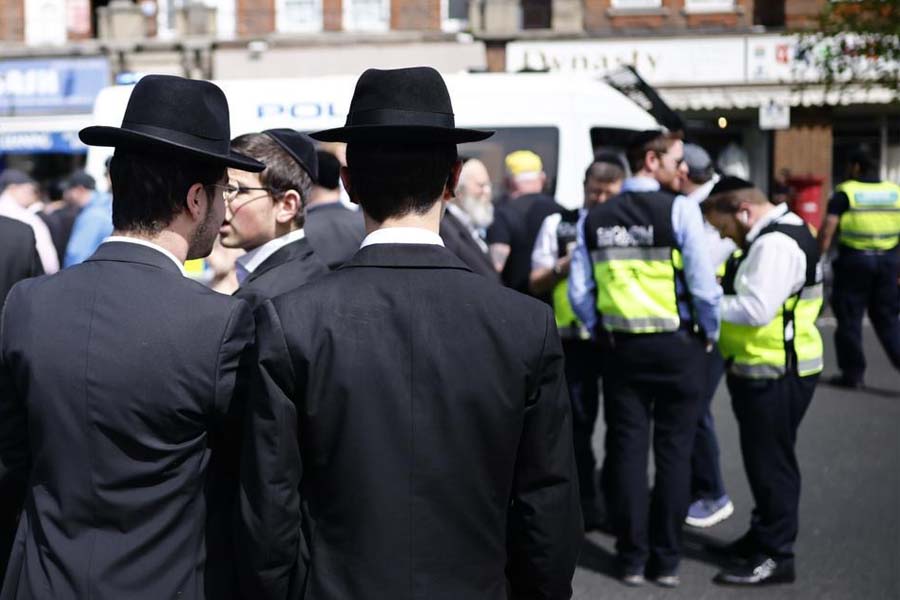
Reading the British media coverage of the Golders Green stabbings, it is impossible not to think of it again. Last Wednesday, a man named Essa Suleiman, a British national reportedly discharged from a psychiatric hospital days earlier, was accused of stabbing three people in London.
The first victim was Ishmail Hussein, a Muslim man who appears to have been an acquaintance of the alleged attacker. Then two Jewish men were stabbed in Golders Green: Shloime Rand, 34, and Moshe Shine, 76.
All three were allegedly victims of the same man, on the same day, in the same city. You would not know this from the coverage that followed.
The Metropolitan Police’s official post on X (formerly Twitter) made no mention of Hussein. Media outlets including SkyNews, Channel 5, Reuters and the BBC reported Suleiman’s court appearance as being for the attempted murder of two Jewish men.
Some observers took to social media to ask why police hadn’t mentioned the third Muslim victim. A fair question; nobody in authority rushed to answer it.
__________________________________________________________________________

https://whatsapp.com/channel/0029VaAtNxX8fewmiFmN7N22
__________________________________________________________________________
Into the open
Britain has always had an unofficial ranking system for victims; an unwritten hierarchy that determines whose suffering commands national attention – and whose quietly disappears.
Most of the time, this hierarchy operates below the surface, plausibly deniable and, if highlighted, easily met with the charge of “playing the victim”. The Golders Green coverage brought it into the open with unusual clarity.
Two Jewish men were named, interviewed and photographed. Their injuries were described in detail. British Prime Minister Keir Starmer made an announcement from Downing Street, portraying the attack as an “antisemitic” act of “terrorism”, while counter-terrorism police launched an investigation. The nation’s moral machinery clicked into motion.
Hussein’s name appeared nowhere. His injuries went undescribed. His community was not consulted. He was, in every meaningful sense, absent from the story of his own attack.
The message this sends, whether or not anyone consciously intended to send it, is that Muslim suffering operates on a different frequency in Britain – one that most institutions simply cannot tune in to.
Tyrer and Sayyid offer a framework for understanding why this happens, and it goes beyond editorial carelessness. They argue that Islamophobia does not merely demonise Muslims. It does something more structurally damaging: it renders them ghostly.
Muslims exist in the western imagination as “either unreal or as a hyperreal interruption to our consciousness”. They are either invisible or monstrous; never simply human, never simply people who can be wronged in the way other people are wronged.
Look at what happened in Golders Green, and this logic is almost surgically precise. Essa Suleiman, the signifier of a Muslim name accused of carrying out the attacks, was made hyperreal; his identity foregrounded, his religion noted, his threat amplified. He became the ghost that bursts violently through the fabric of civilised life. Hussein, the Muslim victim, was made invisible – erased, banished from consciousness.
One Muslim confirms the story Britain wants to tell about itself. The other would complicate it beyond repair.
Institutional Islamophobia
It would be convenient if institutional Islamophobia arrived with warning signs, like far-right slogans or open hostility. It rarely does. It arrives instead as a news release that mentions two victims instead of three; as a headline that loses a name in the edit.
This is precisely what makes it institutional rather than individual. No single journalist woke up that morning and decided that Hussein’s suffering was unimportant. No police officer consciously chose to erase him. The erasure happened through accumulated habit, through the unremarkable reflex of organisations steeped in a culture that has never quite learned to see Muslim pain as pain that counts.
Tyrer and Sayyid are clear that this dynamic cuts across political lines, from the liberal left to the extreme right. The BBC is not a far-right organisation. The Met is not a fascist institution. And yet both, in their coverage of this attack, reproduced a hierarchy of victims that any Islamophobe would recognise and approve of.
This article was first published at Middle East Eye on 6 May 2026
Author

__________________________________________________________________________
FOLLOW INDEPENDENT PRESS:
WhatsApp CHANNEL
https://whatsapp.com/channel/0029VaAtNxX8fewmiFmN7N22

TWITTER (CLICK HERE)
https://twitter.com/IpIndependent

FACEBOOK (CLICK HERE)
https://web.facebook.com/ipindependent

YOUTUBE (CLICK HERE)
https://www.youtube.com/@ipindependent

Think your friends would be interested? Share this story!