Thu 24 September 2026:
TPLF launches offensive in Afar and Amhara as fears grow of renewed Ethiopian civil war
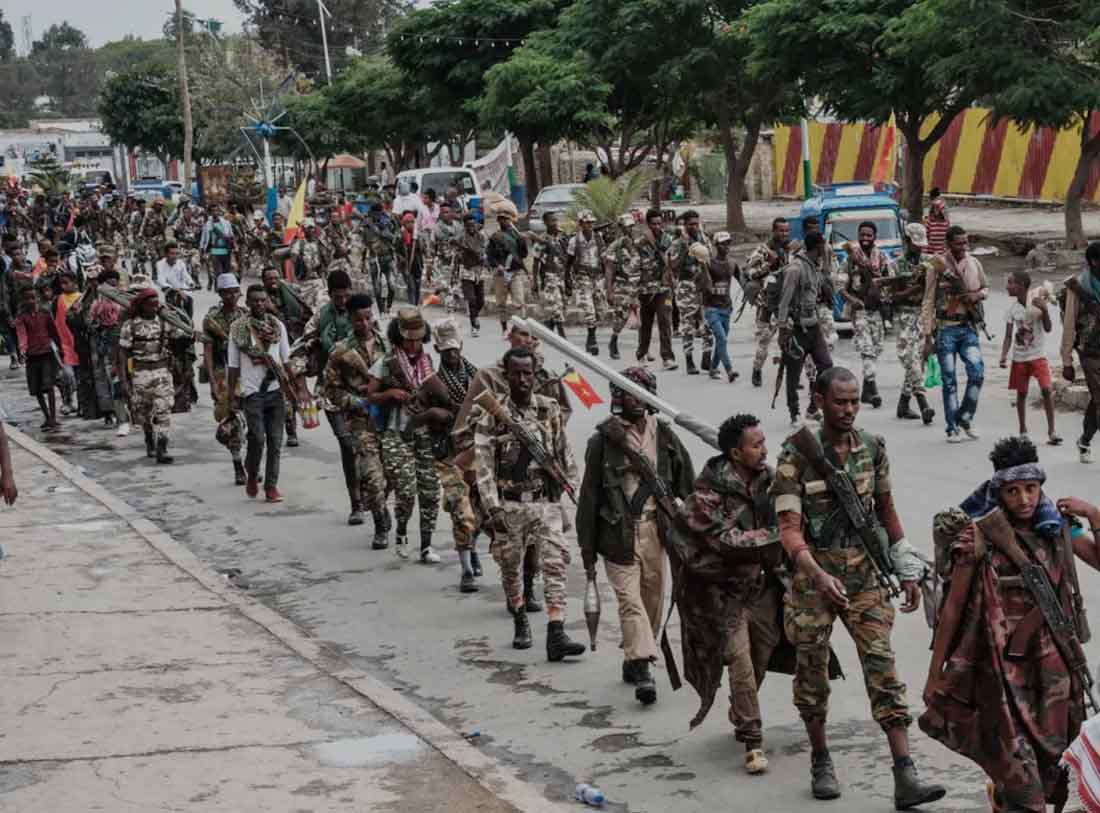
TIGRAY, Ethiopia — Tigrayan rebels have taken control of airports in Ethiopia’s northern Tigray region and launched attacks against federal government positions in the neighbouring Afar and Amhara regions, raising fears of a renewed wider conflict.
The Tigray People’s Liberation Front (TPLF) has “launched an all-out offensive against government positions in Afar and Amhara”, Getachew Reda, an adviser to Prime Minister Abiy Ahmed, said in a post on X on Wednesday.
Reda, a former TPLF leader who later broke with the movement and joined the federal government, said the group had seized airports previously controlled by federal authorities.
“It has taken over federally controlled airports in Tigray leading to the suspension of flights to and from Tigray. The TPLF politico-military leadership has obviously taken irresponsibility to new heights,” he said.
The Tigray regional administration gave a different account, saying it was responding to an “invasion” by federal forces.
In a statement published on Facebook, the regional government accused federal troops of carrying out “intensive bombardments” on Tuesday using “aircraft, drones, and artillery”.
“The Tigray army has been instructed to counter the attack and genocidal invasion launched against us, and has entered into a defensive battle,” the statement said.
__________________________________________________________________________

https://whatsapp.com/channel/0029VaAtNxX8fewmiFmN7N22
__________________________________________________________________________
Fighting spreads along regional borders
Clashes were reported in several parts of Afar, including Abala and Berahle, while shelling was also reported near the border with Amhara.
An Al Jazeera correspondent reported significant military deployments by different forces in border areas, adding to concerns that the confrontation could spread beyond Tigray.
The escalation follows the TPLF’s announcement on Sunday that it had formed an alliance with six other armed groups in Ethiopia with the stated aim of overthrowing Abiy’s government.
The TPLF governed Ethiopia from 1991 until 2018, when Abiy came to power and the group’s influence at the federal level declined. Tensions eventually erupted into a major civil war in 2020.
The conflict lasted until 2022 and killed an estimated 600,000 people, according to estimates by the African Union. The Pretoria Peace Agreement subsequently brought the main hostilities to an end.
Peace deal under strain
Despite the agreement, Tigray has struggled to recover from the war. Around one million people remain displaced, while several provisions of the peace agreement have yet to be fully implemented.
An uneasy period of relative calm persisted until clashes resumed in late 2025. Renewed fighting and escalating tensions in recent months have intensified fears that Ethiopia could again descend into a large-scale conflict.
Alan Boswell, Horn of Africa director at the International Crisis Group, said the deterioration of the peace process had created an increasingly dangerous situation.
“The TPLF has joined with other rebel groups to say that they are going to overthrow and topple the current regime, which is something very close to a declaration of war,” Boswell told Al Jazeera.
He said the federal government had also been carrying out an escalating drone campaign against the TPLF.
“We’ve seen an ongoing and escalating drone campaign by the federal government against the TPLF, and then you’ve seen quite an escalation over the past day. So if we’re not all the way back into something like a full war, we are very, very close,” he said.
Eritrea and Sudan add regional dimension
Boswell warned that the conflict could develop into a broader regional crisis, particularly because of Eritrea’s reported alignment with the TPLF.
During the 2020–2022 war, Eritrean forces fought alongside Ethiopia’s federal government against the TPLF. Relations have since deteriorated, with Addis Ababa now accusing its former ally of supporting the Tigrayan movement.
Boswell also pointed to Eritrea’s relationship with Sudan’s army and worsening relations between Ethiopia and Sudanese military forces.
“Eritrea is also quite close, for instance, with the Sudanese army, and relations between Ethiopia and the Sudanese army have also been deteriorating,” Boswell said, adding that Ethiopia was becoming increasingly involved in the Sudan conflict, particularly along its border.
“So this is all becoming one big regional mess, and it could get very, very ugly if we don’t see de-escalation.”
SOURCE: INDEPENDENT PRESS AND NEWS AGENCIES
__________________________________________________________________________
FOLLOW INDEPENDENT PRESS:
WhatsApp CHANNEL
https://whatsapp.com/channel/0029VaAtNxX8fewmiFmN7N22

TWITTER (CLICK HERE)
https://twitter.com/IpIndependent

FACEBOOK (CLICK HERE)
https://web.facebook.com/ipindependent

YOUTUBE (CLICK HERE)
https://www.youtube.com/@ipindependent

Think your friends would be interested? Share this story!