Tue 16 June 2026:
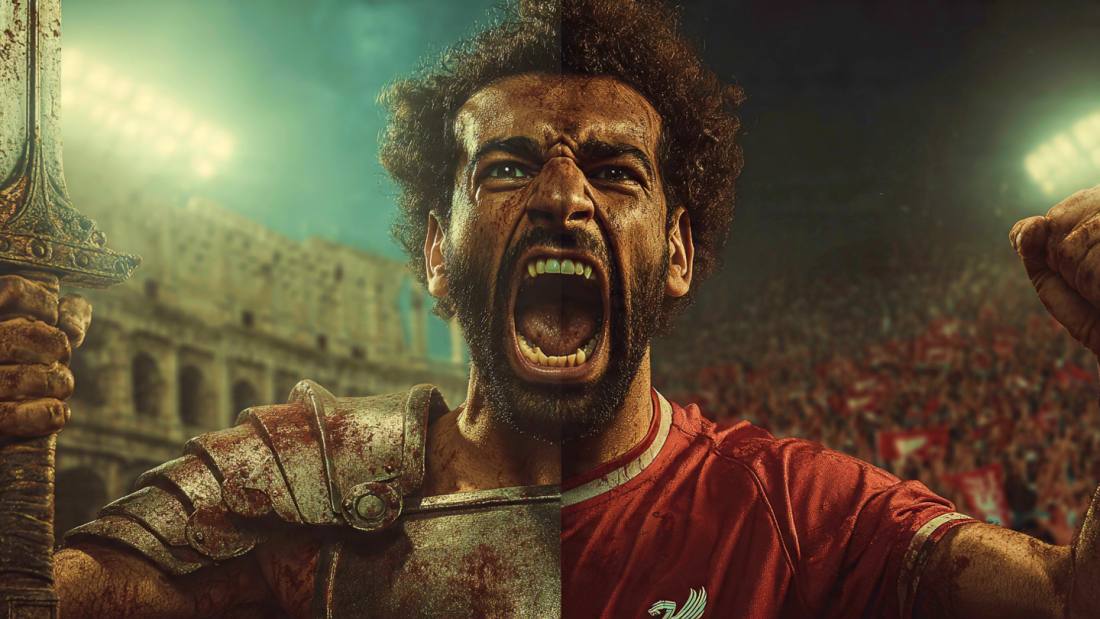
Everyone loves a spectacle. And nothing surges adrenaline through our veins quite like sport. But it’s more than just sport — it’s theatre, cinema, empire. Today’s sporting stars, not unlike the gladiators of ancient Rome, perform under the floodlights of fan frenzy, turning every contest into a game within a game, a drama within a drama.
Two thousand years ago, the roar of 50,000 echoed through the Colosseum’s stone arches. Today, it reverberates off LED-lit stadium walls, through streaming apps, and into millions of palms. Whether it’s a gladiator facing a lion or Virat Kohli facing down fast bowling, one truth remains: the spectacle must go on.
Maradona, Tendulkar, Federer — modern-day gladiators all — dazzle with brilliance, their every move a performance choreographed for the crowd. They understand the crowd’s power — the reverence it bestows, the madness it ignites. In Rome, it was the Colosseum; today, it’s the arena, centre court, or cricket ground, blazing under lights.
As in ancient Rome, modern sport is political theatre. Gladiatorial games were tools of control — designed to pacify, distract, galvanize. Rome’s emperors knew the equation: give the people blood, drama, and a hero — and power secures itself behind the curtains.
Novak Djokovic captured it best: “Tennis players — we’re always playing in centre courts that feel like arenas… the crowd cheering, you’re fighting, you’re screaming — it feels like you’re an animal, fighting for your life.”
The IPL, especially, has refined this primal impulse into an annual spectacle. It isn’t a tournament — it’s a travelling circus. Commentators boom like showmen, owners strut like emperors, and every over is both combat and commercial break. Cricketers — some legends, some memes — play for pride, yes, but mostly for the camera. The crowd must be fed. Purists be damned.
This is sport reimagined by showrunners and brand managers. A billion don’t tune in for technique — they come for sound and fury, sixes into the night sky, final-over madness, celebrity cameos. It’s not about victory. It’s about spectacle. And every player — knowingly or not — plays their part.
These parallels aren’t accidental. In Rome, gladiators, charioteers, and actors were folk heroes, their mass appeal weaponised by senators and emperors. Public holidays marked the games. Amphitheatres hosted bloodsport and comedy alike. In the Colosseum, beasts and men battled while the city watched and cheered.
Yet even then, death wasn’t always the goal. The games evolved — from ritual to pageant, from sacrifice to spectacle.
Two millennia later, not much has changed. The faces differ, the blood is metaphorical, the arenas sleeker. But the hunger remains — to be thrilled, to believe in heroes, to forget for a while.
Strip away the theatrics and the similarities are stark. The economic and social costs of spectacle — then and now — are borne not by emperors or billion-dollar team owners, but by ordinary people.
In Rome, public funds paid for games. The cost of the Colosseum was immense — some estimates peg it at 100 million sestertii, nearly 2% of the empire’s annual budget. It’s comparable to what modern states spend hosting mega-events.
__________________________________________________________________________

https://whatsapp.com/channel/0029VaAtNxX8fewmiFmN7N22
__________________________________________________________________________
Take Tokyo 2020: a $13 billion bill, largely footed by taxpayers. Or the $200 billion Qatar spent on the 2022 FIFA World Cup — building climate-controlled stadiums in a desert. Closer home, the IPL’s media rights now rival those of the NFL, with advertising slots sold by the second.
Yes, these events create jobs and buzz. But the long-term benefits? Often overstated. Economists show that mega-events rarely deliver lasting returns. What’s left are empty stadiums, swelling debts, and lost opportunity — money better spent on healthcare, education, clean water.
And then there are the invisible costs. In ancient Rome, lives were lost. Gladiators — mostly slaves — died for entertainment. Wild animals were slaughtered for laughs. The audience was entertained — and slowly desensitised.
Today’s athletes are rich and willing. But someone still pays. In Qatar, thousands of migrant workers reportedly died building World Cup venues. In Brazil and China, poor communities were displaced to clear land for stadiums. Those behind the scenes — labourers, security guards, media interns — rarely share in the spoils.
There’s also the emotional toll: addiction to sport betting, toxic tribalism, manufactured nationalism, and the ease with which governments use sport to deflect attention from deeper crises. Rome did it to distract from famine and political unrest. Today, governments still do the same. Look away from inflation, inequality, war — and watch the match.
And still — we love it. We scream for goals and sixes. We follow athletes like gods. We’re drawn to the spectacle because it works. It unites, enchants, uplifts. It taps into something ancient: our need for story, for drama, for belonging. Bread and circuses still work. Only now, the bread is popcorn and the circus is in HD.
This isn’t a call to abandon sport. Quite the opposite. Sport can inspire, connect, heal. But we must examine its costs — economic, social, human. We can’t worship the gladiator without questioning the empire.
As Proximo said in Gladiator: “Learn from me. I wasn’t the best because I killed quickly. I was the best because the crowd loved me.”
And that crowd, it seems, hasn’t changed much.
Author

Senior Policy & Reputation Strategist
__________________________________________________________________________
FOLLOW INDEPENDENT PRESS:
WhatsApp CHANNEL
https://whatsapp.com/channel/0029VaAtNxX8fewmiFmN7N22

TWITTER (CLICK HERE)
https://twitter.com/IpIndependent

FACEBOOK (CLICK HERE)
https://web.facebook.com/ipindependent

YOUTUBE (CLICK HERE)
https://www.youtube.com/@ipindependent

Think your friends would be interested? Share this story!