Fri 28 August 2026:
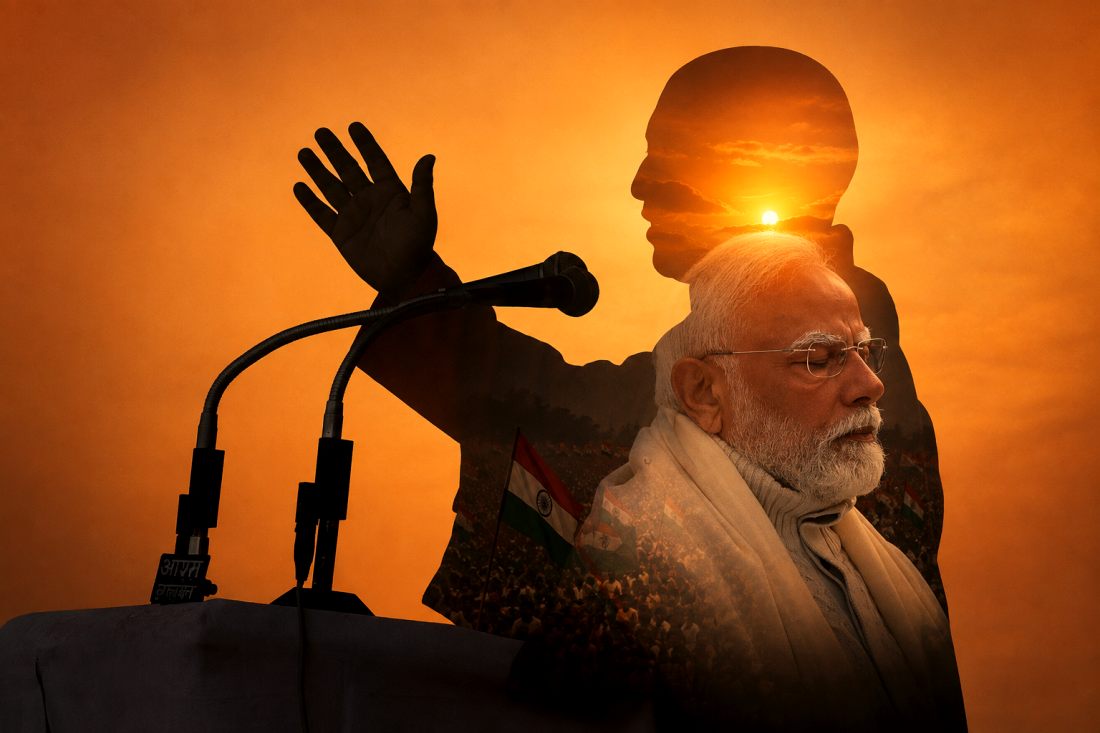
As Uttar Pradesh prepares for its 2027 election, Yogi Adityanath’s bid for a third consecutive term is being closely watched—not only as a test of his control over India’s most populous state, but also as a potential turning point in the succession debate around Prime Minister Narendra Modi.
Uttar Pradesh, home to more people than Brazil, is expected to play a major role in shaping India’s political direction when it goes to the polls in 2027. Chief Minister Yogi Adityanath, the saffron-robed Hindu monk who has ruled the state since 2017, is seeking a third consecutive term that could further strengthen his position within the Bharatiya Janata Party and the wider Sangh Parivar.
A report by Michael Stott, Andres Schipani and Jyotsna Singh in the Financial Times examines Adityanath’s political journey and his efforts to transform Uttar Pradesh through a combination of Hindu nationalist politics, strict law-and-order measures and development-driven governance.
The FT describes Adityanath as one of the strongest supporters of Prime Minister Narendra Modi’s Hindu-first political agenda. A third successive electoral victory, it argues, could elevate him into the ranks of possible successors to Modi, who turned 75.
A senior national government official described the Uttar Pradesh chief minister as a “mirror image” of Modi. Both leaders have cultivated narratives centred on humble origins, personal discipline and a connection with ordinary citizens.
Adityanath has also built a political identity around strong messaging. His government maintains a substantial social media operation that promotes videos of his speeches, government projects and public appearances. The FT says his communications strategy has helped him master the demands of modern political messaging.
Speaking to the newspaper, Adityanath defended his monastic background, saying that religious life offered another way of understanding society and its problems.
Supporters credit his government with improving security, cracking down on organised crime and accelerating infrastructure development. Adityanath points to new roads, investment and business activity as evidence of Uttar Pradesh’s transformation from one of India’s historically least-developed states.
Critics, however, accuse his government of pursuing divisive communal politics and raising serious concerns about the treatment of minorities. His past comments about Muslims, along with policies involving cow slaughter and interfaith relationships, have drawn criticism from opponents and international human rights observers. They argue that such measures have deepened religious polarisation and challenged India’s secular and democratic traditions.
Despite reports of occasional tensions between the BJP’s central leadership in Delhi and the Uttar Pradesh government in Lucknow over political appointments, autonomy and the pace of policymaking, Adityanath and Modi remain important figures within the broader RSS-BJP ecosystem.
The FT notes that Adityanath has recently emphasised his loyalty to Modi while avoiding public discussion of his own national ambitions. The chief minister has also become more cautious in his engagement with foreign media, suggesting an awareness of the political sensitivities surrounding speculation about his future.
__________________________________________________________________________

https://whatsapp.com/channel/0029VaAtNxX8fewmiFmN7N22
__________________________________________________________________________
Political Rivalries Could Intensify Ahead of the UP Election
The prospect of a third term for Adityanath is also likely to fuel speculation about internal competition within the BJP and the wider political establishment. Some commentators see his growing popularity and independent political base in Uttar Pradesh as a potential challenge to the party’s existing national leadership structure.
The argument reflects broader speculation over how power and succession could evolve within the BJP after Modi. However, there is no confirmed evidence that the prime minister is planning to step down in 2027, or that Adityanath is actively seeking to replace him.
Reports of possible disagreements between Delhi and Lucknow should also be viewed within the context of a party system where candidate selection, electoral strategy and leadership ambitions frequently generate competing interests.
For now, Adityanath publicly projects loyalty to Modi. Yet the 2027 Uttar Pradesh election is expected to be a crucial political test. A decisive third victory would not only strengthen his control over India’s most populous state—it could also make the debate over his future national role increasingly difficult to ignore.
As Uttar Pradesh moves closer to the election, the contest will therefore be about more than development, law and order or religious identity. It may also offer one of the clearest indications yet of how the next generation of leadership could emerge within India’s ruling political establishment.
SOURCE: INDEPENDENT PRESS AND NEWS AGENCIES
__________________________________________________________________________
FOLLOW INDEPENDENT PRESS:
WhatsApp CHANNEL
https://whatsapp.com/channel/0029VaAtNxX8fewmiFmN7N22

TWITTER (CLICK HERE)
https://twitter.com/IpIndependent

FACEBOOK (CLICK HERE)
https://web.facebook.com/ipindependent

YOUTUBE (CLICK HERE)
https://www.youtube.com/@ipindependent

Think your friends would be interested? Share this story!