Tue 02 June 2026:
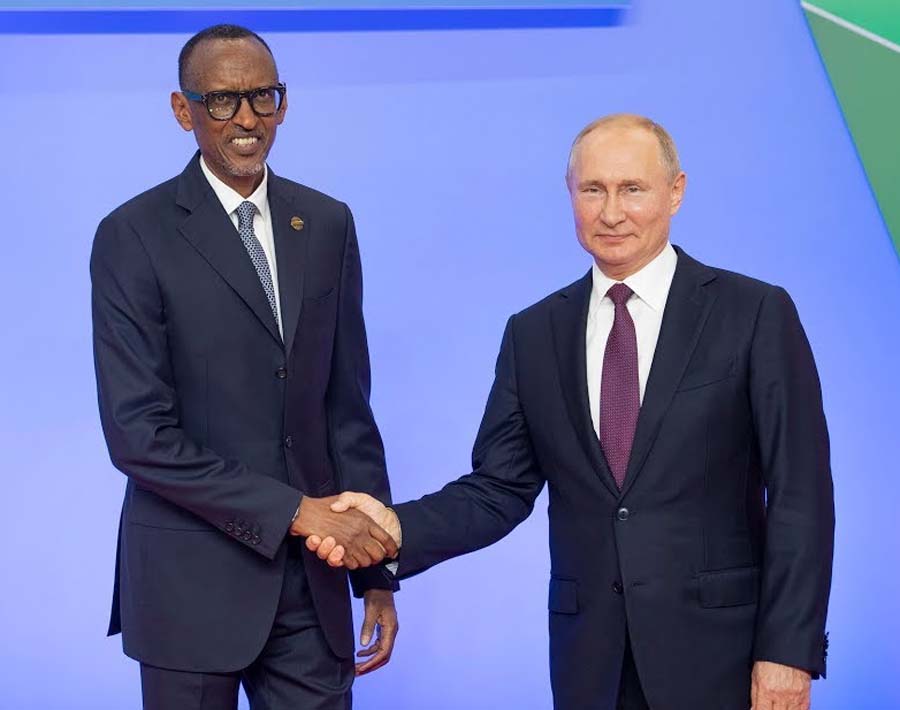
A new Memorandum of Understanding between Rwanda and Russia, focused on cooperation in nuclear technology, medicine and energy, may appear technical on the surface. But beneath the language of scientific collaboration, there’s a deeper story about power, sovereignty and Africa’s place in an increasingly multipolar world.
Journalist and editor at Kigezi News, based in Kampala, Musinguzi Goodluck argues that Africa’s nuclear ambitions are not new. South Africa remains the continent’s only country operating commercial nuclear power facilities, while countries such as Egypt, Uganda and Kenya have spent years exploring or advancing nuclear energy programmes.
However, for decades, Africa’s relationship with global powers has largely been viewed through a familiar lens. Western nations occupied the centre of economic and diplomatic influence, while African countries often found themselves navigating the conditions attached to aid, trade and security partnerships.
That is changing now.
__________________________________________________________________________

https://whatsapp.com/channel/0029VaAtNxX8fewmiFmN7N22
__________________________________________________________________________
The energy question Africa cannot ignore
Africa’s energy deficit remains one of its greatest development challenges. While the continent is home to a rapidly growing population and vast natural resources, many countries continue to struggle with unreliable electricity supply and insufficient infrastructure.
In a time increasingly shaped by artificial intelligence, advanced manufacturing and data-driven economies, access to stable power is no longer just a development issue, but a necessity.
Many of the continent’s nuclear initiatives have remained trapped in research phases, feasibility studies and prolonged planning cycles.
Meanwhile, the rest of the world continues to accelerate investment in technologies that depend on abundant and reliable energy.
The concern raised by Goodluck is that with a lack of sufficient energy capacity, Africa risks being a consumer of future technologies rather than a producer of them.
Why Rwanda is looking East
The Rwanda-Russia agreement arrives at a particularly sensitive moment. Rwanda has faced growing international scrutiny over allegations related to the conflict in the Democratic Republic of Congo.
The resulting diplomatic tensions and sanctions have complicated Kigali’s relationship with some Western governments, particularly the United States.
Against that backdrop, cooperation with Russia takes on additional significance.
The agreement suggests that Rwanda is actively diversifying its international partnerships rather than relying on a single sphere of influence. In practical terms, it reflects a broader trend visible across the continent.
African governments are increasingly engaging with multiple global powers, including Russia, China, India and members of the BRICS bloc, in pursuit of investment, infrastructure and technological development.
This does not necessarily indicate a rejection of the West. Rather, it reflects a growing willingness to seek alternatives.
For countries seeking economic growth and strategic autonomy, expanding diplomatic options has become an increasingly attractive proposition.
The rise of a multipolar Africa
The world is moving away from the unipolar moment that followed the end of the Cold War.
Emerging powers are challenging traditional centres of influence, creating new opportunities and new risks for developing nations. Africa finds itself at the centre of this transition.
Many African leaders have become frustrated with relationships that they perceive as overly prescriptive, particularly when economic cooperation is linked to broader political or social conditions. Russia and China have often positioned themselves as partners willing to engage on different terms.
Whether those alternatives ultimately benefit African countries remains a matter of debate. What is clear, however, is that the appeal of diversified partnerships continues to grow.
The Rwanda-Russia agreement represents more than bilateral cooperation. It reflects a broader shift in how African states are approaching diplomacy in an increasingly competitive global environment.
The risk of becoming a battleground
While greater diplomatic flexibility offers opportunities, it also creates new vulnerabilities. Goodluck’s concerns extend beyond energy and economics. He warns that Africa could find itself caught in the middle of intensifying competition among major powers.
The continent’s vast reserves of critical minerals have elevated its strategic importance.
Resources essential for batteries, renewable energy technologies, electronics and advanced manufacturing are increasingly concentrated in African countries.
As global demand rises, so too does competition.
History offers numerous examples of external powers treating resource-rich regions as arenas for geopolitical rivalry. The fear is that Africa could once again become a stage upon which larger powers pursue their strategic objectives.
The concern is not merely economic. It is also about sovereignty.
As countries seek new partnerships, they must simultaneously avoid becoming dependent on any single power, whether Eastern or Western.
Security in an uncertain era
The discussion surrounding the Rwanda-Russia agreement also raises broader questions about security and defence.
Goodluck points to growing conversations within East Africa regarding regional cooperation and collective security. While much of this discussion remains outside the public spotlight, the underlying concern is clear. If geopolitical tensions continue to rise, African countries may need stronger mechanisms for protecting their interests and safeguarding regional stability.
For smaller nations, these concerns are particularly acute.
Military power remains unevenly distributed globally, and few African states possess the capacity to withstand prolonged external pressure independently. This reality makes regional cooperation increasingly important, not only for defence but also for diplomacy and economic resilience.
Africa’s defining challenge
The Rwanda-Russia agreement reflects a continent at a crossroads. On one hand, Africa requires significant investment in energy, technology and infrastructure to support future growth. On the other hand, those partnerships are unfolding within a rapidly changing geopolitical environment where global powers are competing for influence, resources and strategic advantage.
For Goodluck, the challenge is not simply choosing between East and West. It is ensuring that African countries retain enough agency to make decisions based on their own developmental priorities rather than external pressures.
The broader lesson is that energy agreements, trade partnerships and diplomatic realignments can no longer be viewed in isolation. They are increasingly interconnected pieces of a much larger global puzzle.
As Africa seeks to define its place in that puzzle, the question is not whether the continent will be affected by shifting global power dynamics, but whether it will shape them, or simply react to them.
For more on this conversation, watch the video below:
written by Muskaan Ayesha
This article originally published in Salaamedia click here

__________________________________________________________________________
FOLLOW INDEPENDENT PRESS:
WhatsApp CHANNEL
https://whatsapp.com/channel/0029VaAtNxX8fewmiFmN7N22

TWITTER (CLICK HERE)
https://twitter.com/IpIndependent

FACEBOOK (CLICK HERE)
https://web.facebook.com/ipindependent

YOUTUBE (CLICK HERE)
https://www.youtube.com/@ipindependent

Think your friends would be interested? Share this story!