Sun 30 August 2026:
Egyptian authorities announced Saturday that archaeologists have discovered a tomb more than 4,000 years old at the Saqqara necropolis south of Cairo, along with a linked system of burial shafts holding human remains and grave goods.
The Ministry of Tourism and Antiquities said the finds came during the first season of excavations by an Egyptian team at Saqqara’s Bubasteion cemetery.
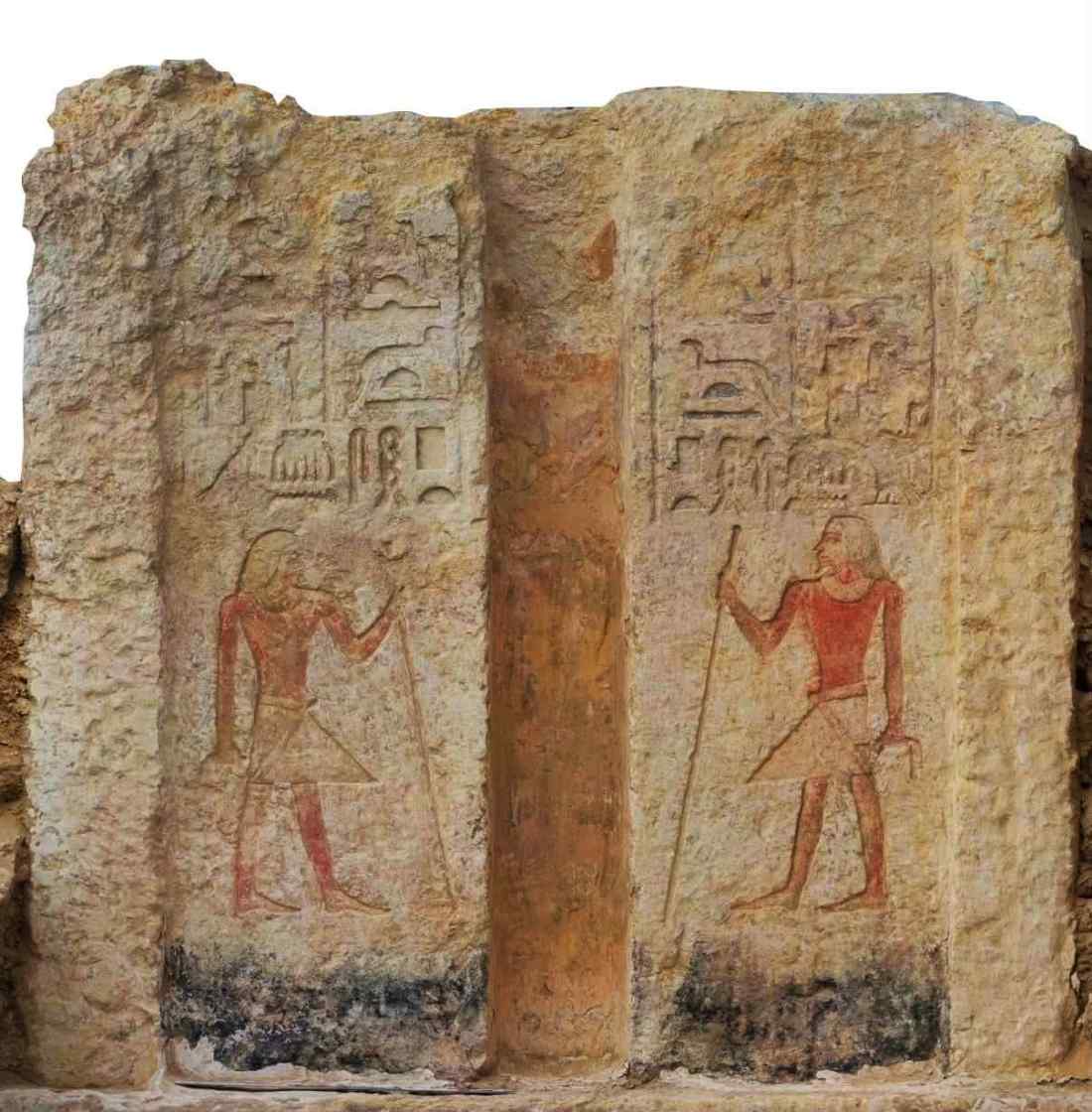
The tomb dates to the Old Kingdom—the period of the pyramid builders—and belonged to an official named Sekhentyu-Ptah.
Excavations revealed remains of his funerary chapel, including a false door still standing in its original position.

In front of the door, archaeologists found a complete set of alabaster ritual objects, including an offering table, offering disk, purification basin, jug and bowl.
The objects bear hieroglyphic inscriptions identifying the tomb owner and listing several of his titles.
They show that Sekhentyu-Ptah held several senior positions, including royal chamberlain, overseer of the king’s works and royal documents, keeper of the secrets of royal decrees, priest of the goddess Maat and overseer of scribes.
Mohamed Abdel Badie, head of the antiquities sector, said finding the objects together in their original setting provides important evidence about funerary rituals and practices during the Old Kingdom.
__________________________________________________________________________

https://whatsapp.com/channel/0029VaAtNxX8fewmiFmN7N22
__________________________________________________________________________
The mission also uncovered an interconnected system of burial shafts containing numerous human burials, large quantities of colored funerary cartonnage and more than 100 faience ushabti figurines.
Three stone coffins were found sealed and in their original condition, along with a wooden falcon statue, pottery and other artifacts.
Amr al-Tayeb, head of the Saqqara antiquities area and the excavation mission, said the discoveries provide valuable material for studying burial practices and tracing how the cemetery was reused during different historical periods.


Preliminary studies showed that some of the burial shafts had been looted in antiquity, with tomb robbers cutting openings between burial chambers, he said.
Despite the ancient looting, the ministry said the surviving finds retain significant archaeological value and could shed further light on the site’s layout, architecture and successive phases of use.
Bubasteion, named after Bastet, the ancient Egyptian goddess associated with cats, was used for burials and funerary rituals in several periods of Egyptian history.
Egypt’s Old Kingdom lasted roughly from 2686 BC to 2181 BC.
The mission is continuing to document and analyze the finds, with the ministry saying there are “promising indications” that more structures and artifacts remain to be uncovered.
SOURCE: INDEPENDENT PRESS AND NEWS AGENCIES
__________________________________________________________________________
FOLLOW INDEPENDENT PRESS:
WhatsApp CHANNEL
https://whatsapp.com/channel/0029VaAtNxX8fewmiFmN7N22

TWITTER (CLICK HERE)
https://twitter.com/IpIndependent

FACEBOOK (CLICK HERE)
https://web.facebook.com/ipindependent

YOUTUBE (CLICK HERE)
https://www.youtube.com/@ipindependent

Think your friends would be interested? Share this story!